Thursday, September 29, 2011

Support Cleaner Air and Your Local Farmer

Union Square Greenmarketimage by Barbara L. Hanson used under Creative Commons license

Eating locally grown food is a nutritious way to improve air quality in the New York metro area. Not only is locally grown food fresh, but it also reduces pollution because it doesn’t have to travel as far from the soil to your kitchen table. Food that is transported just a short distance before it is consumed reduces the amount of emissions from the vehicles used to carry them, leading to better air quality for everyone. This is why Clean Air NY will be touring numerous farmers’ markets this fall in New York City, on Long Island and in the Lower Hudson Valley. For more details and specific dates, visit our Facebook event and RSVP!

Friday, September 23, 2011

Eco-Friendly Travel Tips to New York’s Fall Sporting Events

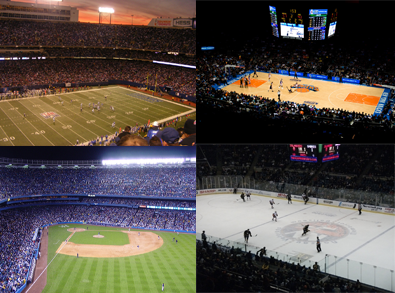
Football, Baseball, Basketball and Ice Hockey Arenasimages used under Creative Commons license, credits below

Fall is a busy time for professional sports leagues. Major League Baseball is about to begin the playoffs, the National Football League has started its 2011-2012 season and the National Hockey League is in its pre-season and will start in early October. Depending on the outcome of labor negotiations, the National Basketball Association could start its season sometime this autumn. Many New Yorkers are traveling to cheer on their favorite teams now, so we want to provide you with some eco-friendly travel tips to help you reduce air pollution.

The best way to improve air quality is to avoid driving. If you have to drive, don’t drive alone. The easiest way to leave your car behind is by taking mass transit. The three main sports venues in New York City, Madison Square Garden, New Yankee Stadium and Citi Field, all have their own dedicated subway stops. Taking the train to the game is a snap. There are also convenient mass transit options for visiting arenas outside of the five boroughs. For a full list of mass transit directions to the region’s sports venues, check out our blog post, “Take the Train to the Game.”

If you’re going to drive to the game, you can minimize the amount of air pollution your trip creates. Carpooling is an effective way to cut emissions and expenses. Sharing a ride takes cars off the road and splits the cost of driving across multiple riders. Another way to prevent pollution while driving is to avoid idling. If you’re going to have a tailgate party before the game, don’t run your engine after your vehicle is parked.

Enjoy breathing cleaner air at the games, and let’s go Jets, Giants, Mets, Yankees, Knicks, Nets, Devils, Islanders and Rangers!

Photo Collage Credits:
Football Field (Top Left) by tedkerwin
Basketball Court (Top Right) by Jean Baptiste Bellet
Baseball Diamond (Bottom Left) by Rob Boudon
Hockey Rink (Bottom Right) by dougtone

Wednesday, September 14, 2011

Get On Your Feet for Cleaner Air!

Hiking Pathimage by ScubaBear68 used under Creative Commons license

When you think of low-emission modes of transportation, walking and bicycling are two of the cleanest ways to get around. They’re good for the environment and offer exercise that is great for your own personal health. Before temperatures start dropping and being outdoors becomes less pleasant, Clean Air NY encourages you to get on your feet and enjoy some of the beautiful scenery New York has to offer by going for a hike or bike ride!

Here are some options to help you get started:

In New York City:
In the Lower Hudson Valley:
In Long Island:

Wednesday, September 7, 2011

Let’s Talk About Telework

Home Officeimage by jnyemb used under Creative Commons license

Telework allows an employee to operate in a location outside his or her primary office, using telecommunication devices such as modems, phones and faxes to communicate. Technological innovations mean many people only require a computer, secure Internet connection and phone line to do their work; they can perform effectively anywhere they have access to these tools. If your job fits this description, consider discussing telework with your supervisor. There are considerable benefits for everyone and for our air quality.

Telework can help employers because it reduces overhead costs in the office and increases employee productivity as it can improve employee job satisfaction. Telework can assist employees in achieving a better balance between professional and personal lives, since most employees choose to telework from their homes. Whenever an employee teleworks, a round trip of commuting is eliminated, reducing air pollution from vehicle travel and saving the employee time. According to the United States Census Bureau, New York has the longest average commute of any state at 31.2 minutes; average New Yorkers would get more than an hour of extra time in their day whenever they telework.

Telework also is being embraced by the Federal government, which has set goals to increase participation among Federal employees. A February 2011 report by the United States Office of Personnel Management states:
“President Obama, the Congress, and OPM have all encouraged Federal agencies to expand their use of telework to ensure continuity of operations; find targeted productivity improvements and reduce overhead, real estate, environmental, and transit costs; and improve employees’ ability to manage their work and life obligations.”
If you want help setting up your own telework arrangement with your employer, 511NY Rideshare can help you create a personalized telework plan.

Tuesday, August 30, 2011

Thank You for Six Great Weeks in Bryant Park!


The sixth and final Broadway in Bryant Park event was held on Thursday, August 11. Now that we at Clean Air NY have had time to reflect, we think New Yorkers could not have spent their Thursday afternoons in a better way this summer! Each week, the crowds were huge and enthusiastic about their desire to do their part for cleaner air. We want to thank everyone who came to our tent to speak with us, especially the 1,000-plus New Yorkers who signed up to receive our updates when air pollution is expected to be high. If you were unable to sign up at the event, you can use our online signup form to have Air Quality Action Day updates sent to your inbox whenever air pollution is expected to be high.

Wednesday, August 17, 2011

Extra Credit for Cleaner Air

Whenever our Clean Air NY teams communicate with our network of individuals and employers, we often encounter people who are already helping to improve air quality and are looking for even more ways to take action. We encourage New Yorkers to look first at making changes to their transportation habits, such as carpooling, taking mass transit, teleworking and combining errands into one trip. However, if these changes aren’t workable for you at this time, or you already take alternate forms of transportation and want some “extra credit” to improve air quality further, here are more ideas that can really add up.
  • Don’t mow your lawn on Air Quality Action Days. First, sign up to receive alerts from Clean Air NY when air pollution is going to be high. When these days occur, postpone mowing your lawn until after the Air Quality Action Day has passed.
  • Don’t drive around looking for parking. If a parking lot is crowded, don’t drive around in circles looking for a close space. If you park your car at the first open spot and walk, you will cut down on extra driving and it probably won’t take you any longer to get inside. If you’re looking for street parking, check out our Community Partner Parking Auction to see how its app can help you find a spot without circling your block.
  • Refuel after dark. When you are refueling your vehicle, we often encourage you to stop at the “click” to prevent gasoline fumes from leaving your tank and entering the air. This is because the fumes get baked by the sun and turn into pollution. Refueling after dark adds an extra layer of protection because any fumes that do escape have time to dissipate before the sun comes out again.

Wednesday, August 10, 2011

Build Sandcastles that Protect Our Air: Take Transit to the Beach!

Few activities are more associated with summer than a day at the beach. Clean Air NY encourages New Yorkers to carpool whenever possible, and now is the perfect time to gather your friends for a shared ride down to the shore. There are circumstances, however, when friends are coming from different parts of the region and can’t meet in a central location beforehand. Others may not have a car and would have to rent or borrow one to drive. We want to offer another solution: Take mass transit!

Numerous beaches conveniently are accessible using the New York metro area’s extensive mass transportation network. Here are just some of the options available to take transit to the shore:

The Water Taxi Beach on Governor’s Island

Governor's Island This brand-new beach is just minutes from downtown Manhattan. It also has free admission and free transportation. If you live in the five boroughs, now you don’t even have to head to Long Island or New Jersey to put your toes in the sand. For more details, visit the website, or you can check out the similar beach in Queens.

Directions: Take the free Governor’s Island Ferry from Slip 7 at the Battery Maritime Building at the corner of South and Whitehall streets.

Long Beach

Long Beach Get to this Long Island beach using the Long Island Rail Road. You can get a special beach fare round-trip ticket for just $19; a beach pass is $10. Along with plenty of sun and sand, Long Beach has two miles of boardwalk for you to explore.

Directions: Take the LIRR to the Long Beach station. The beach is just a few blocks away.

Rockaway Beach

Rockaway Beach You can get to Rockaway Beach in Queens using the subway. It’s the largest urban beach in the United States; a $2.50 one-way subway fare will take you to the miles of shoreline and the boardwalk at Rockaway Beach.

Directions: Take the A train to Broad Channel and then transfer to the shuttle that will drop you off at any of a number of stops between 90th and 116th Beach streets.